UVC light in the 260–280nm range is absorbed by the DNA and RNA of bacteria, viruses, and fungi. This absorption creates thymine dimers — permanent molecular damage that prevents the pathogen from replicating. The key engineering formula is:
Dosage (mJ/cm²) = Irradiance (mW/cm²) × Exposure Time (s)
For surface disinfection, the light source must deliver sufficient dose at close range. This is why placement above conveyor belts or equipment surfaces matters: the irradiance must be engineered, not assumed.
PurlightTech employs ±3nm precision binning, ensuring every tube's spectral output stays locked to these peak efficiency zones. This consistency is what makes the claimed inactivation rate verifiable — critical for facilities that must document performance for audits and international buyers.
| Method | Critical Failure |
|---|---|
| Chemical spraying | Requires shutdown, leaves residue, raises food-contact compliance risk |
| Mercury UV lamps | Toxic mercury (fracture = contamination incident), slow warm-up, fragile glass |
| Manual wiping | Inconsistent coverage, labor-intensive, human error |
None of these deliver the combination food processors need: inline, continuous (24/7), and residue-free disinfection.
PurlightTech UVC LED tubes are designed for linear, overhead integration:
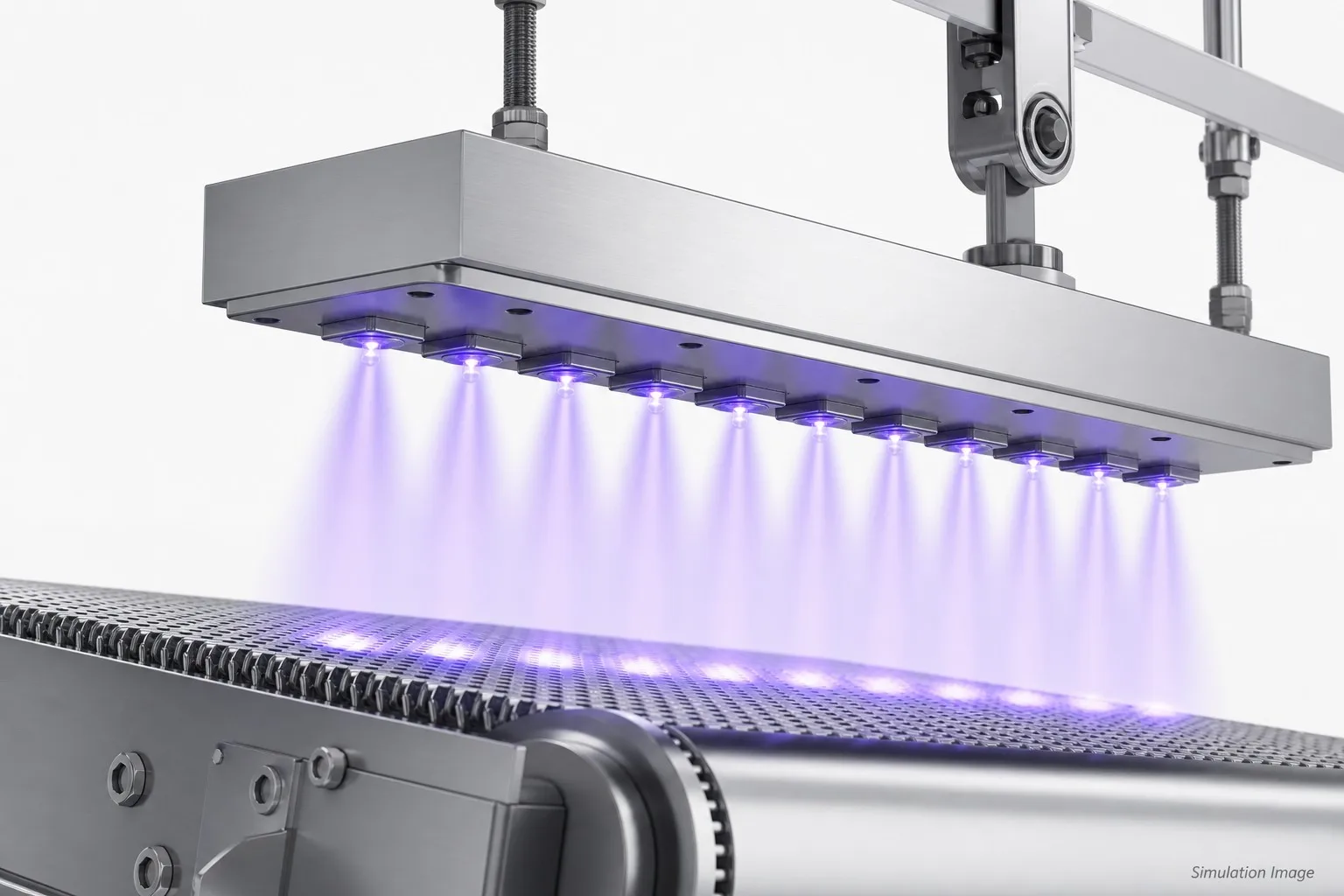
Figure 1: Linear UVC LED array delivering structured point-source dose above a conveyor surface.
The instant-on capability of LEDs (100% output in microseconds) enables pulse-based disinfection that synchronizes with production flow — no warm-up, no wasted energy.
Not all surfaces require the same dose. The required UV energy depends on the target pathogen and its susceptibility. Below are commonly cited reference ranges for surface disinfection (specific values must be validated for your application):
| Pathogen Type | Typical Reference Dose (mJ/cm²) | Notes |
|---|---|---|
| Vegetative bacteria (e.g., Salmonella, E. coli) | 5 – 20 | Relatively susceptible; low-dose band |
| Enveloped viruses (e.g., influenza, norovirus surrogates) | 10 – 30 | Mid-range dose band |
| Fungi & mold spores (e.g., Aspergillus) | 30 – 100 | Spores require higher energy |
| Bacterial spores (e.g., Bacillus) | 100+ | Highest band; not the target for routine surface disinfection |
The practical takeaway: food-contact surfaces facing vegetative bacteria and common viruses fall in the 5–30 mJ/cm² band. This band is achievable with overhead linear LED arrays at engineered mounting heights — but only if the array layout, reflector geometry, and belt speed are specified correctly.
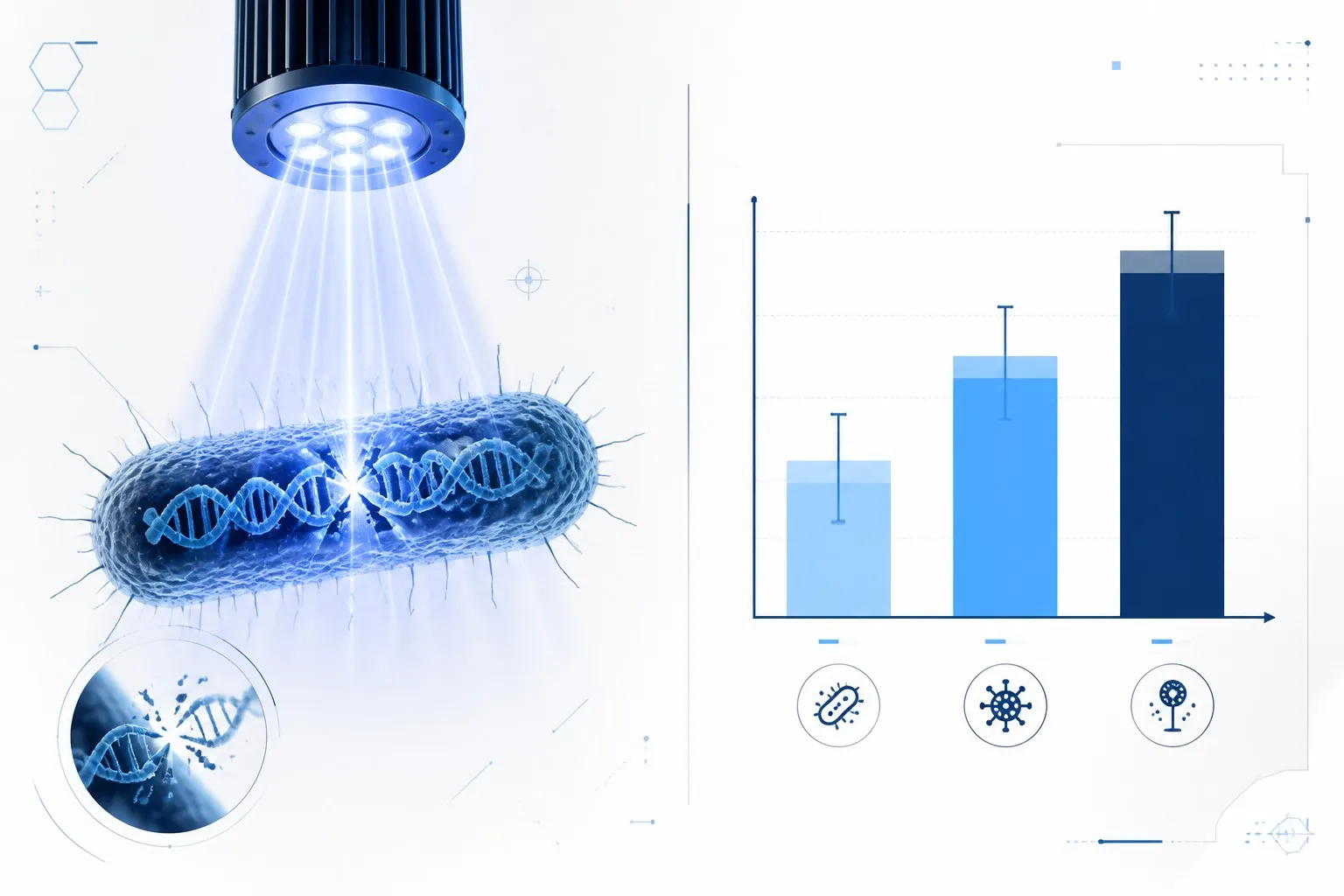
Figure 2: Dose-band comparison — bacteria, viruses, and mold spores.
A practical three-step approach for planning an inline surface disinfection zone:
PurlightTech provides free preliminary sizing — our engineers model your belt width, speed, and mounting constraints and return a recommended tube count and layout within the optical simulation report.
A disinfection system is only as good as its verified output. Three routine practices keep performance defensible in audits:
No. UVC disinfection is a physical process — photons damage pathogen DNA without depositing any chemical residue on the surface.
Our tubes are rated for 50,000 hours of continuous operation — over 5 years of reliable service.
Yes, when configured correctly with reduced-ozone 275nm wavelengths and proper shielding, they are used for surface disinfection in food processing environments — and are not intended for direct food-contact surface treatment without a validated materials and process review.
The ≥99.99% inactivation rate is verified through third-party microbiological testing (e.g., ASTM E3135) under defined dose conditions. PurlightTech's optical simulation reports then model how that verified dose distributes across your specific surface geometry.
No. UVC LED tubes are inline and instant-on, enabling continuous disinfection without halting the line.
UV disinfection devices require an EPA Establishment Number; germicidal claims must be supported by test data. PurlightTech provides compliance documentation for qualified buyers.
It depends on the target dose and belt speed. As a general starting point, 150–400 mm above the surface is typical, but the correct value is determined by the optical simulation — mounting height directly trades off irradiance against coverage width.
A quarterly radiometer check at the surface plane is the industry norm, with more frequent cleaning of the quartz sleeves in greasy or dusty environments. Logging readings creates an audit-ready performance record.
In the era of tightened food safety audits and antibiotic-resistant pathogens, surface disinfection is an engineering problem — and the engineering answer is UVC LED. Residue-free, mercury-free, 50,000-hour reliable, and designed for continuous inline integration.
 Hot News
2026-03-31
2025-03-17
2025-03-17
2025-03-17


 EN
EN