Pesticide resistance is not a future risk; it is a documented, ongoing trend. Monitoring programs and published reviews have reported resistant populations across hundreds of arthropod species — including the stored-product pests, filth flies, and cockroaches that matter most to food facilities and commercial buildings (a widely cited estimate; verify the current figures for your region and pest complex).
The mechanics are simple and unforgiving. Every spray event selects for the survivors. Over generations, the population shifts toward individuals that tolerate the chemistry — and each new active ingredient eventually hits the same wall. This is the "pesticide treadmill": higher doses, more frequent applications, new products, and diminishing results, all while cost and scrutiny climb.
The conclusion is not "stop using pesticides" — it is "stop relying on pesticides as the first and only tool."
Integrated Pest Management (IPM) is a decision-making framework that ranks control methods by risk. The core principle: use the least-toxic option that works, and treat chemical pesticides as a last resort, not a default.
For an auditor, the difference between a mature IPM program and a spray program is visible in the documentation: monitoring records, trend data, corrective actions, and justification for every chemical use. Physical trapping produces that documentation as a by-product of normal operation.
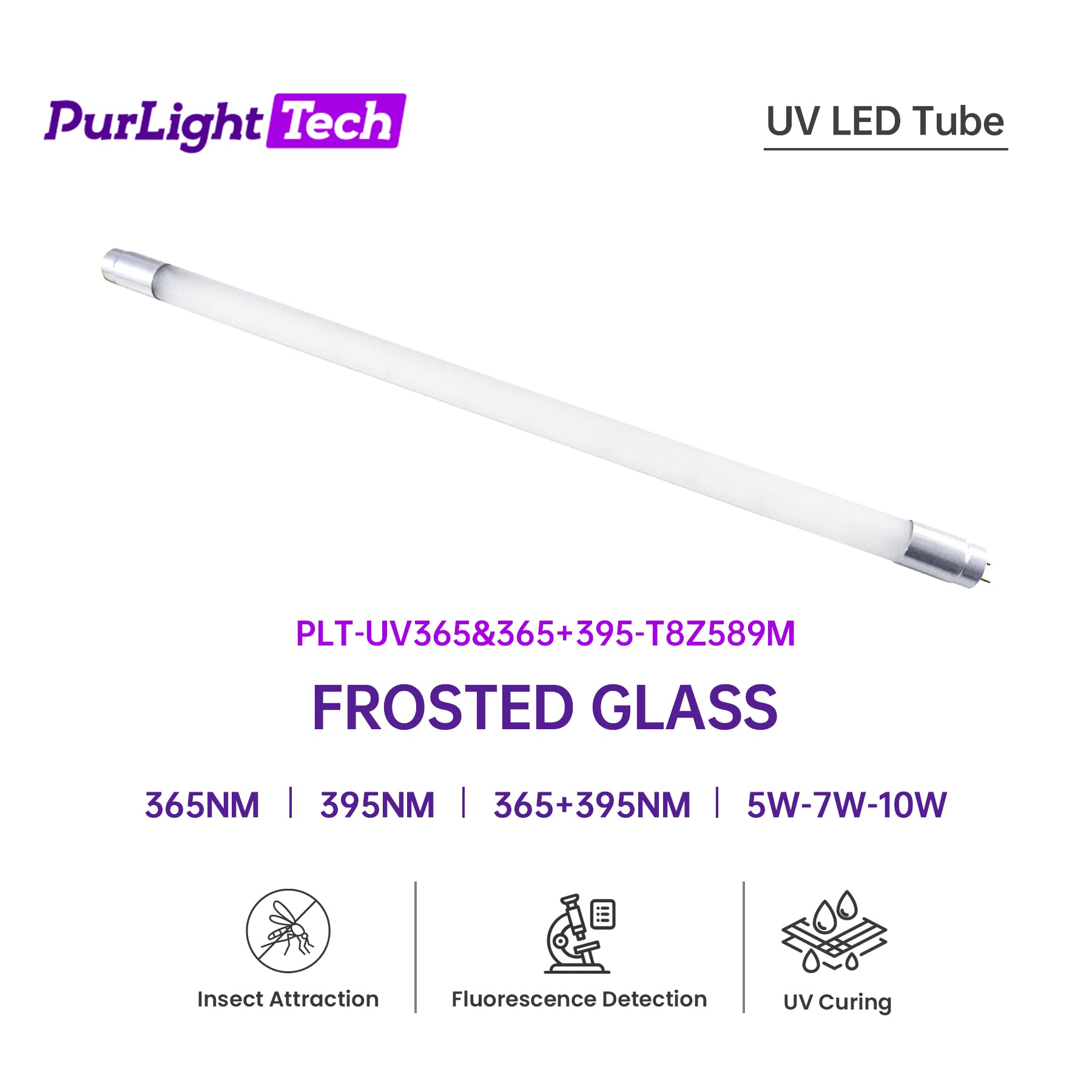
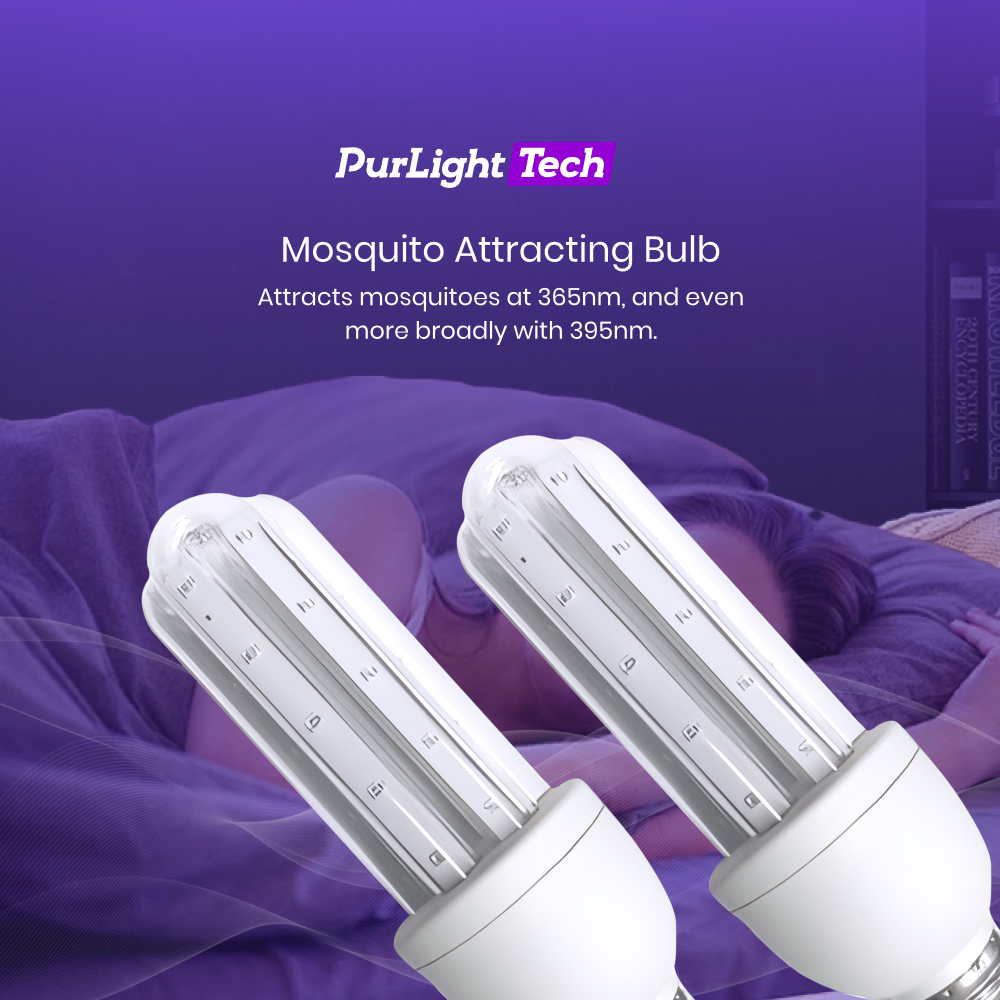
Flying pests do not "see" a trap the way a human sees a lamp. Their compound eyes are most sensitive to specific bands of ultraviolet and blue light, not to how the tube looks to us. The relevant engineering quantity is the peak wavelength emitted by the source, measured in nanometers — not the color a marketing photo shows.
The practical rule: specify the tube by its peak wavelength, not by its glow. Two tubes can look identical to a human eye and differ by 30nm in emission — with very different attraction profiles for the target pest complex.
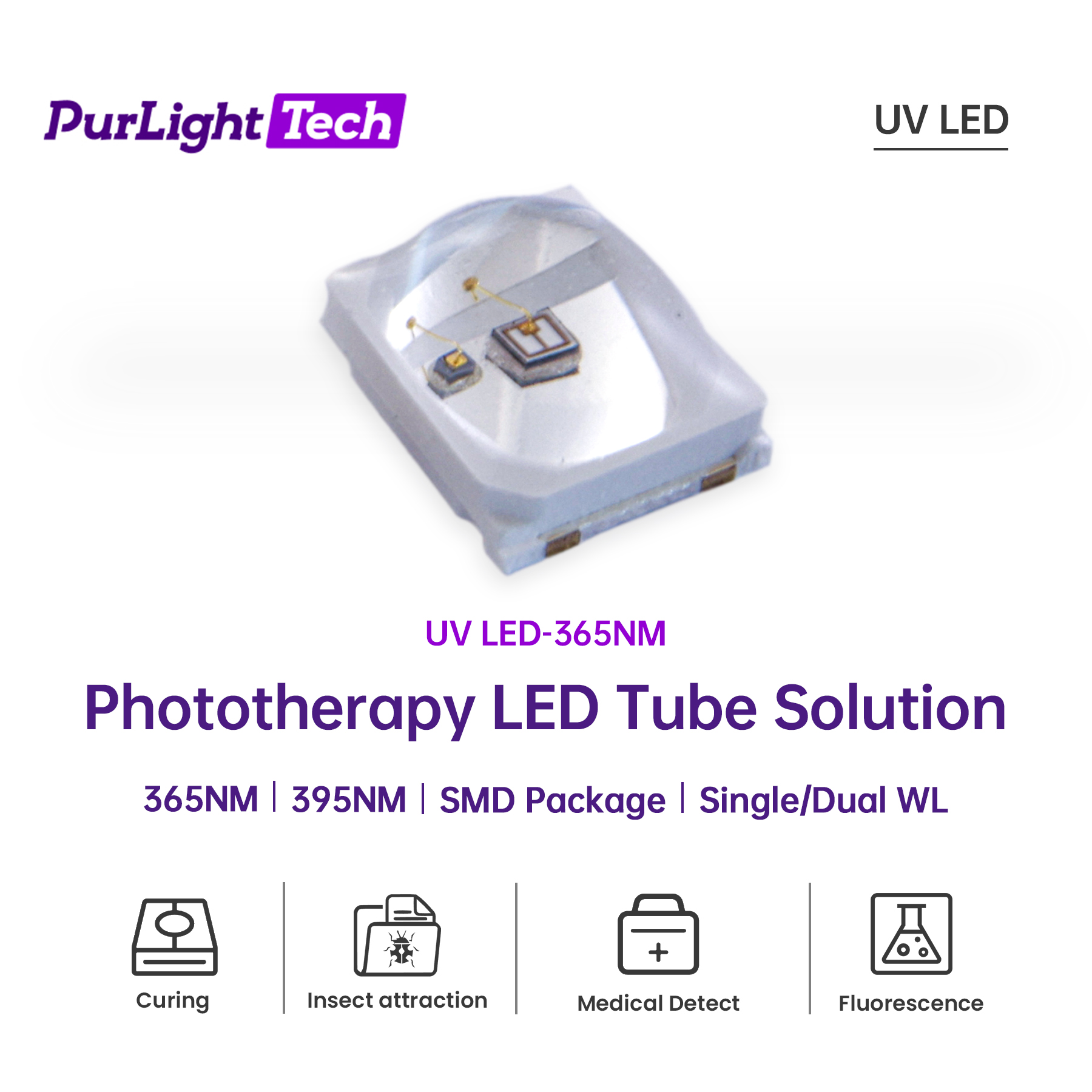
A fluorescent blacklight tube emits a broad, messy spectrum, with a good share of energy landing outside the bands that attract insects. A UV LED emits a narrow band centered on its rated peak. That concentration does two things: more of the electrical input becomes useful attractant light, and the trap's optical signature is predictable and repeatable — which is what makes monitoring data meaningful over time.
| Comparison | Fluorescent blacklight tube | 365nm UV LED tube |
|---|---|---|
| Spectral precision | Broad spectrum; much energy outside attraction bands | Narrow-band, rated peak (365nm / 395nm) |
| Mercury | Contains mercury — disposal and breakage liabilities | Mercury-free; no special disposal stream |
| Lifespan | Frequent lamp changes; typically seasonal | Rated for 50,000 hours of continuous operation under rated operating conditions |
| Maintenance | Regular re-lamping and cleaning cycles | Long service intervals; fewer touch points |
| Cold start / cycling | Slow start; cycling shortens life | Instant start; rapid cycling tolerated |
Two policy frameworks are quietly pushing the same direction. The Minamata Convention on Mercury and its national implementations restrict mercury-containing products, and RoHS restricts hazardous substances in electrical equipment — mercury among them. Fluorescent tubes are not banned outright everywhere, but the regulatory and disposal burden is only increasing. Facilities that plan a five-year capital cycle should price the mercury question today, not discover it at disposal time.
On catch rates: no supplier should promise a specific catch rate — attraction depends on species mix, facility layout, competing light sources, and placement. The correct expectation is a dependable, repeatable attractant source — the photobiology is in the wavelength, and the economics are in the maintenance and compliance ledger.
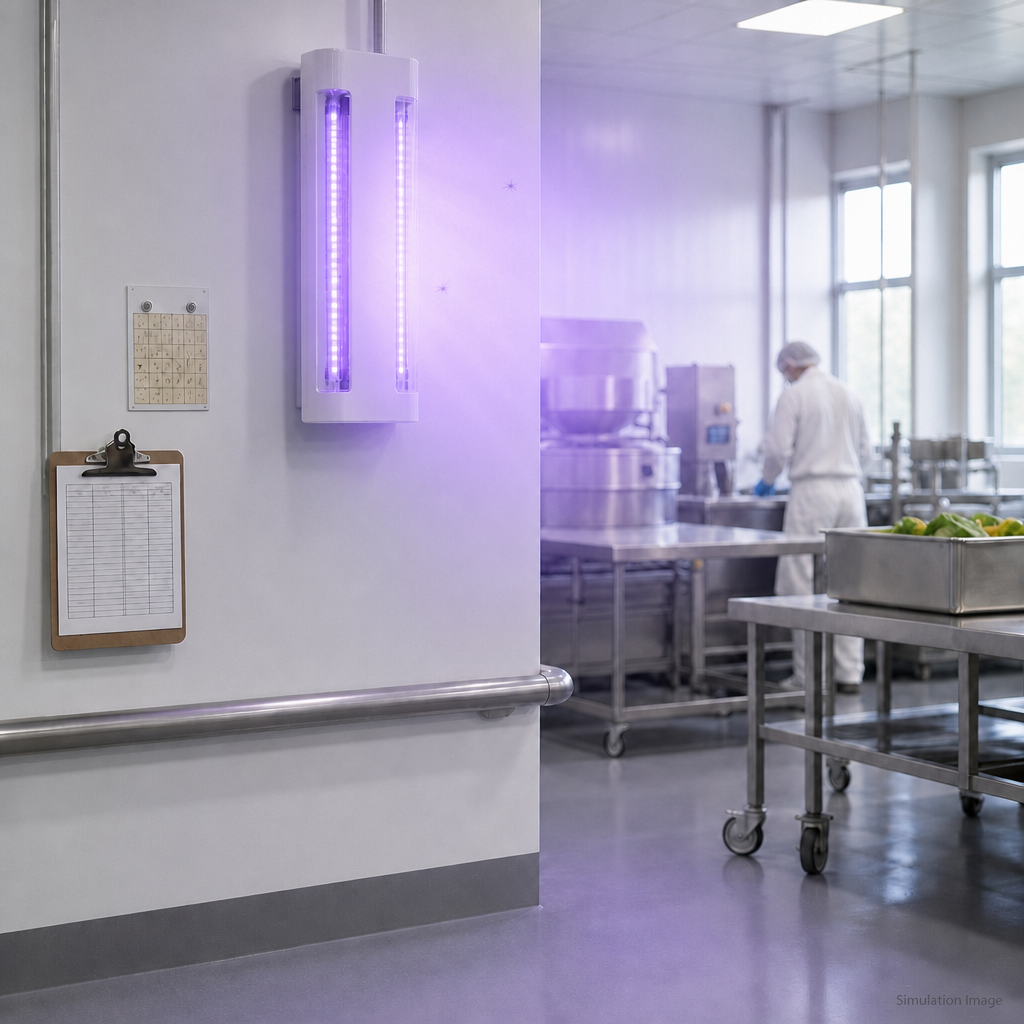
A UV LED ILT is two instruments in one: a control device and a monitoring device. Its placement determines both jobs:
For food facilities, placement also has to respect zone classifications: traps near exposed product must be positioned so that trapped insects cannot contaminate product or packaging — a detail auditors check.
No. It means reliance on pesticides alone is no longer dependable. Resistance varies by species, region, and chemistry. The IPM answer is to reduce selection pressure — use monitoring and physical control first, and reserve chemistry for justified, documented situations.
Because the compound eyes of many commercially relevant flying insects show peak sensitivity in the UVA range around 365nm (with a complementary band near 395nm). Specifying by peak wavelength gives a predictable attractant source. The photobiology is a reference point — validate against your facility's pest complex.
No responsible supplier promises a specific catch rate. Catch depends on species mix, layout, competing light, and placement. The value of UV LED is a dependable, repeatable attractant source with far lower maintenance and compliance burden — measure your own trend data to judge performance.
Quality tubes are rated for 50,000 hours of continuous operation under rated operating conditions (reference value; validate with your supplier). Actual service life depends on operating environment, cleaning, and duty cycle.
Yes. UV LED tubes contain no mercury, which removes the breakage-containment protocol and the special disposal stream that fluorescent blacklight tubes require — an advantage that grows as mercury regulations tighten.
In a mature IPM program, physical trapping can carry much of the load — but a complete program also includes sanitation, exclusion, and monitoring. Whether chemistry is needed at all depends on your pest pressure and facility type. The goal is to minimize and justify chemical use, not necessarily to eliminate it overnight.
Catch logs per trap, trend data, service and cleaning records, and corrective-action notes. A UV LED ILT program generates these as by-products of normal operation. Check your facility's certification standard (e.g., food-safety audits) for the specific record requirements.
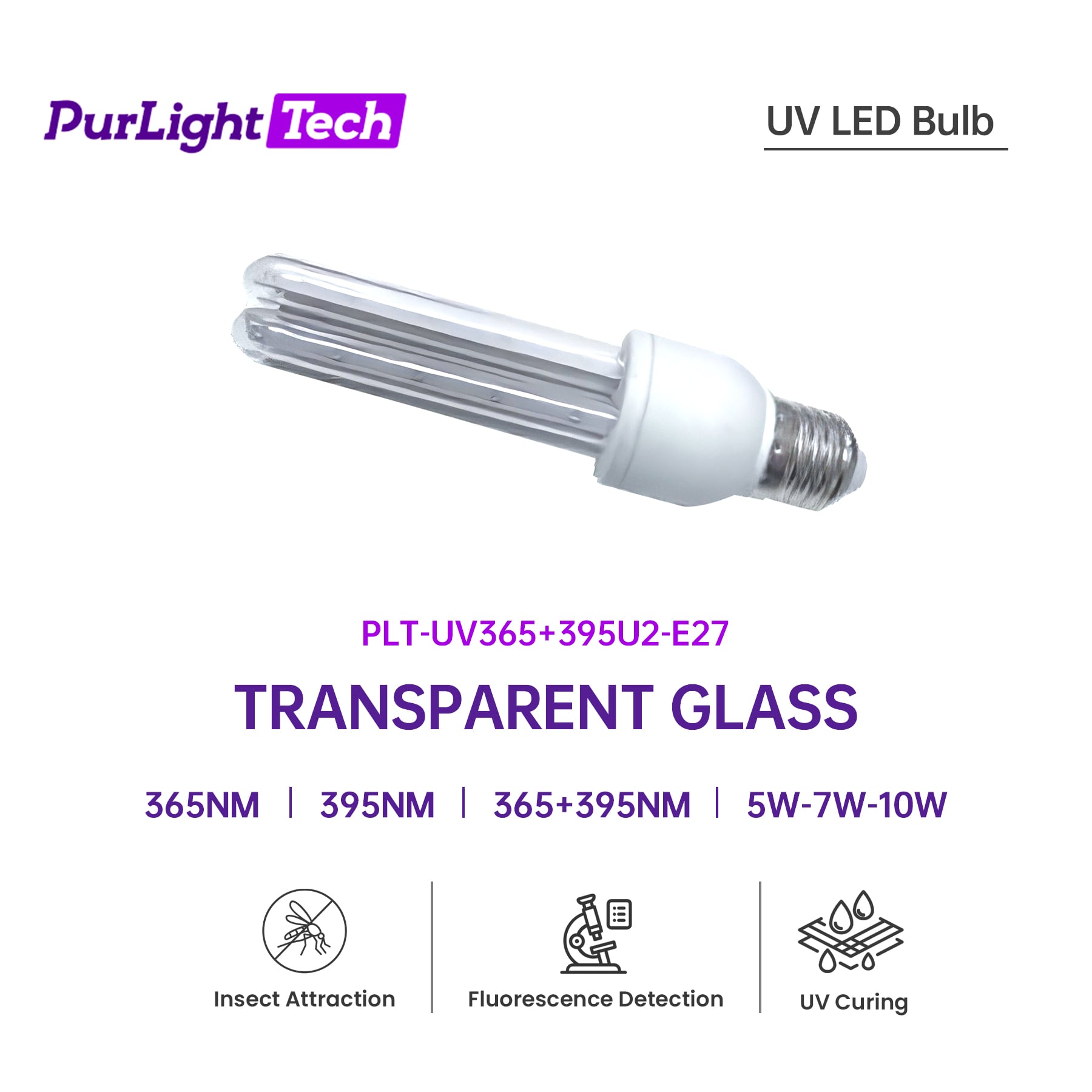
PurlightTech supplies 365nm and dual-band UV LED insect light tubes for commercial facilities, built for the North American market with mercury-free construction and long service life. Confirm the specific configuration and compliance requirements for your program with our team.
Pesticide resistance is the market signal that the spray-can era is ending — and IPM is the framework that replaces it. Physical trapping with a 365nm UV LED tube is the load-bearing tool: the wavelength is the science, the mercury-free LED is the compliance story, the 50,000-hour rated life is the maintenance ledger, and the catch log is the audit evidence. For facilities that must document pest control instead of just perform it, UV LED physical trapping is not one option among many — it is the answer the market is moving toward.
Related reading: Smart Pest Management: The Science of UV LED Mosquito Trapping in the US — how 365nm and 395nm bands work in outdoor and perimeter applications.
 Hot News
2026-03-31
2025-03-17
2025-03-17
2025-03-17


 EN
EN