Europe's 2026 Mosquito Season Is a Buying Signal: 365/395nm UV LED Insect Tubes for Commercial Facilities
In the summer of 2026, Italy and its Lazio region are at the center of Europe's most severe West Nile virus season in recent years. As of 26 August 2026, Lazio had confirmed 63 cases — nearly half of them neuroinvasive — with new reports across multiple health districts (source: Lazio regional health authorities). Italy reported 46 locally acquired West Nile cases by 22 July 2026, the most in Europe (source: ECDC weekly surveillance), after recording the EU/EEA's heaviest burden in 2025 with 779 cases, 72 deaths and a 9.2% case-fatality rate (source: Italian national surveillance, 2025 annual data). For a commercial facility — a hotel with a garden terrace, a restaurant with outdoor seating, a food plant, a hospital campus, a stable — this is not a news story happening somewhere else. It is a buying signal. This article explains why 365/395nm UV LED insect tubes are the commercial-grade response, and introduces the PurlightTech tube line built for the job.
01The Numbers Behind the Signal
2025, Italy (WNV): 779 confirmed cases, 72 deaths, 9.2% case-fatality rate — the highest burden in the EU/EEA (source: Italian national surveillance, 2025 annual data).
2026, to 22 July: 46 locally acquired WNV cases in Italy, the most in Europe; Greece reported 21 (source: ECDC weekly surveillance, 22 July 2026).
2026, Lazio to 26 August: 63 cases; nearly half neuroinvasive; new reports across multiple health districts (source: Lazio regional health authorities).
2026, to late August: national seasonal total in the hundreds, with 17 deaths (source: aggregated news reporting, late August 2026).
Chikungunya 2025: 384 locally acquired cases in Italy across four regions (source: Italian national data).
Dengue 2024, Marche: 199 locally acquired cases in a single regional outbreak — a European record for local transmission (source: regional outbreak reporting).
Two vectors drive the European transmission picture, and both matter to facilities:
Culex pipiens (the common house mosquito) — the main West Nile vector, biting from dusk through the night, breeding in the wetlands and rice fields of the Po Valley and similar humid areas.
Aedes albopictus (the Asian tiger mosquito) — vector of chikungunya, dengue and Zika, biting by day, established in Italy since 1990 and now spread across much of southern Europe.
ECDC's framing: Europe has entered a phase in which longer transmission seasons, wider geographic spread and higher intensity of mosquito-borne disease are the new normal (source: ECDC statements, 2026). Warmer temperatures accelerate mosquito development; milder winters raise overwinter survival; heat waves followed by heavy rain multiply breeding sites. For facilities, the practical translation is simple: the season is longer, the pressure is higher, and guests, customers and auditors notice.
02Why Commercial Facilities Are on the Front Line
A mosquito is not a nuisance in a commercial setting — it is a liability.
Hotels and outdoor hospitality. A guest bitten on the terrace writes a one-star review; a wedding reception disrupted by biting insects is a refund and a reputation event.
Restaurants with outdoor seating. Patrons expect to eat without being bitten. In many markets, an outdoor dining area without insect control is now uncompetitive.
Food facilities. Insect control is part of the food-safety program, documented and auditable — and mosquito season pressure extends the duty cycle of every trap on the wall.
Hospitals and care facilities. Occupant sensitivity restricts chemical application; physical trapping is the defensible default.
Stables, farms and livestock operations. Biting pressure on animals affects welfare, productivity and, in West Nile areas, real disease risk.
The common thread: these facilities need a control method that runs continuously, requires no chemistry near people or food, and produces records an auditor can read. That is precisely what a UV LED insect light tube does.
03Why 365/395nm UV LED: The Wavelength Is the Science
Insect light traps work by attraction, not by chance. Flying insects are drawn to specific ultraviolet bands, and the engineering quantity that matters is the peak wavelength — not how the tube looks to a human eye.
365nm is the classic attractant band — the reference point around which professional insect light traps are specified, matching the phototactic sensitivity of mosquitoes and many flying pests.
395nm is the companion band, widening the attractant window to cover a broader spectrum of flying insects — flies, moths and other species whose response peaks longer.
A dual-band 365+395nm tube therefore covers a wider pest mix across the day: the dusk-and-night activity of Culex mosquitoes and the daytime presence of Aedes and other fly species around a commercial site.
Compared with the fluorescent blacklight tubes that preceded them, UV LED tubes bring four operational advantages to a commercial facility:
Narrow-band output — the energy is concentrated at the attractant wavelengths instead of spread across a broad, inefficient spectrum.
Mercury-free construction — no breakage-containment protocol, no special disposal stream, no mercury-compliance questions.
Long rated service life per the specification sheet — fewer re-lamping visits, lower labor cost over the season.
Instant start, no ballast — predictable operation and simpler fixture design.
One honest distinction: a UV LED insect tube is a trapping and monitoring instrument — it attracts flying insects to a capture point; it does not kill larvae and it is not a chemical treatment. It is the physical-control layer of an integrated program, running continuously where spraying cannot.
04The Product Layer: PurlightTech 365/395nm UV LED Insect Tubes
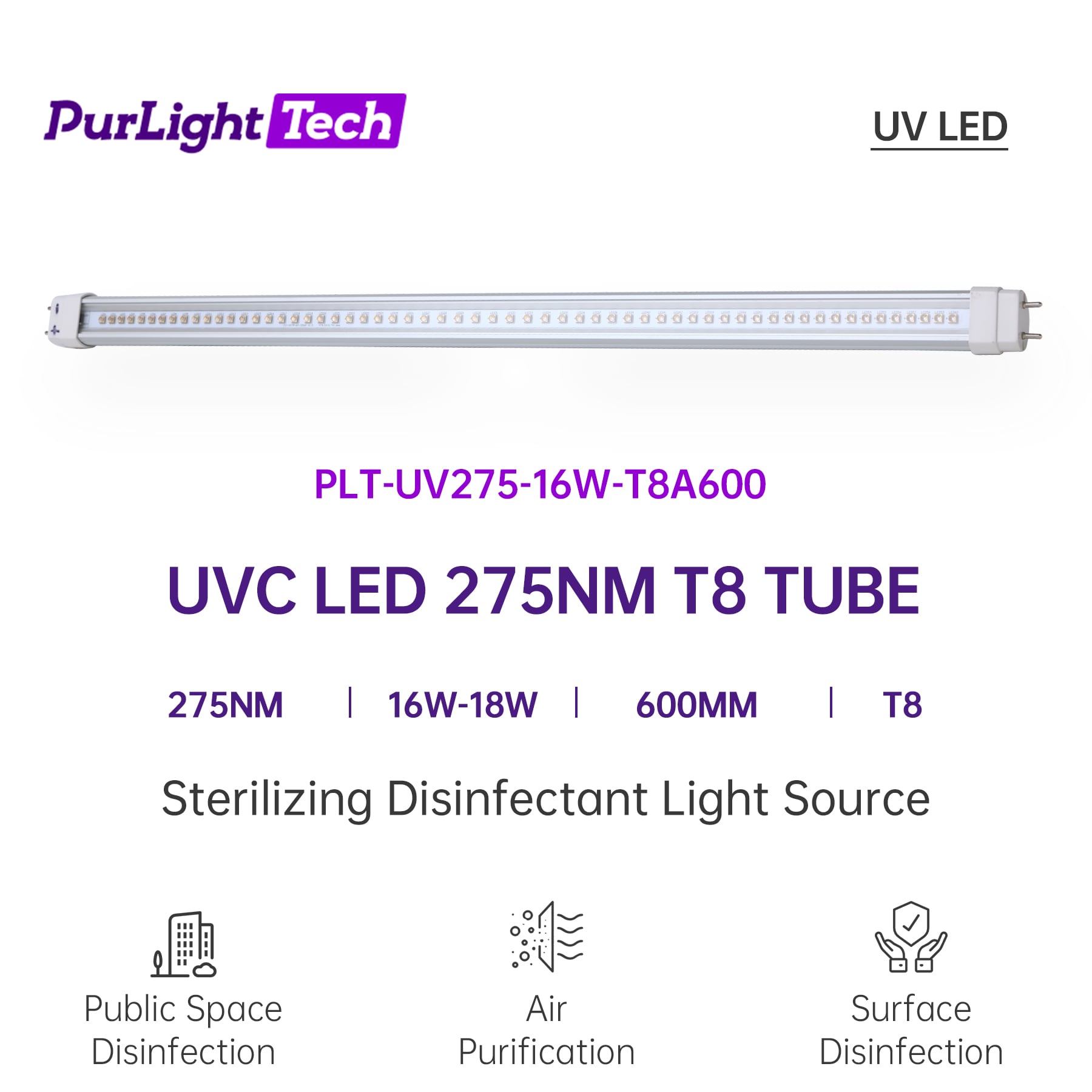
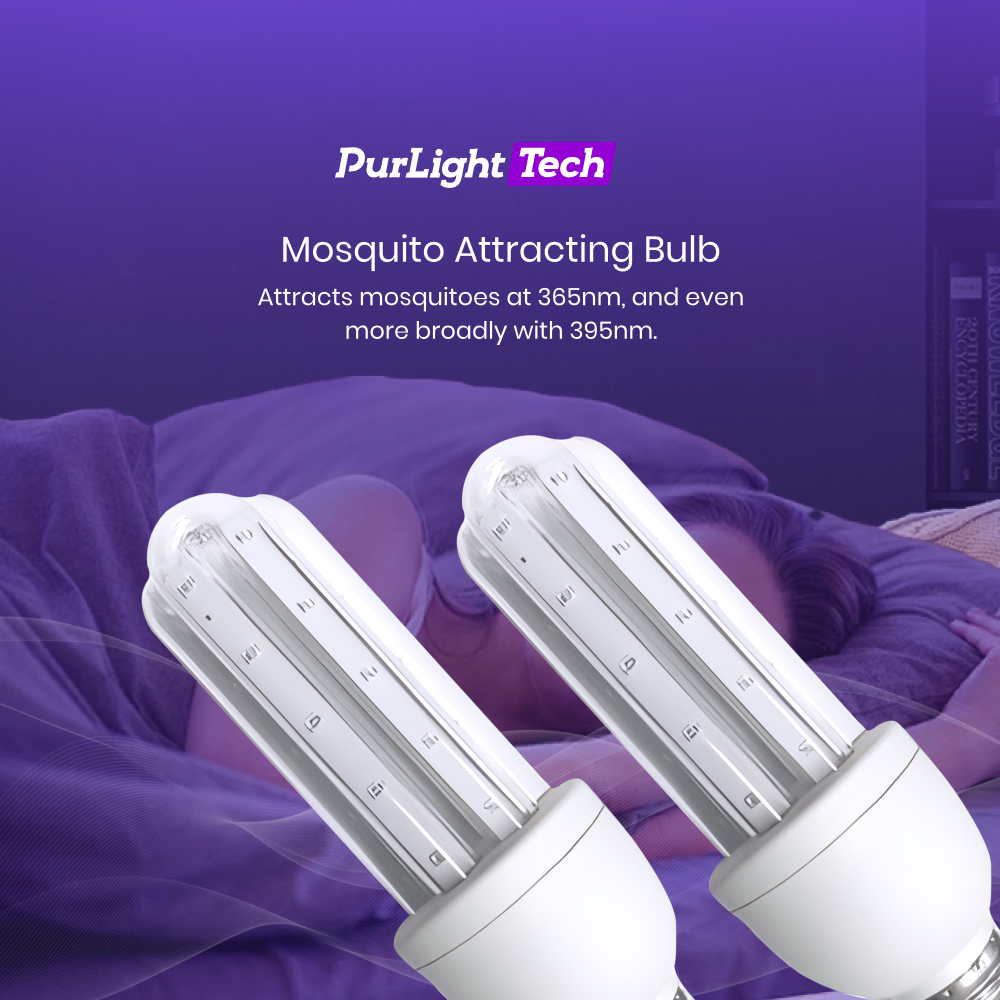
PurlightTech builds industrial-grade UV LED insect light tubes for commercial facilities — 365nm and 365+395nm dual-band configurations, engineered for continuous commercial duty.
Dual-band 365+395nm coverage for mixed flying-insect pressure, or single-band 365nm where mosquitoes dominate.
Mercury-free and chemical-free — nothing to leak, break, or dispose of as hazardous waste; a defensible choice in food, hospitality and care environments.
Built for commercial duty — long rated service life per the specification sheet, engineered to run through a full season with minimal touch points.
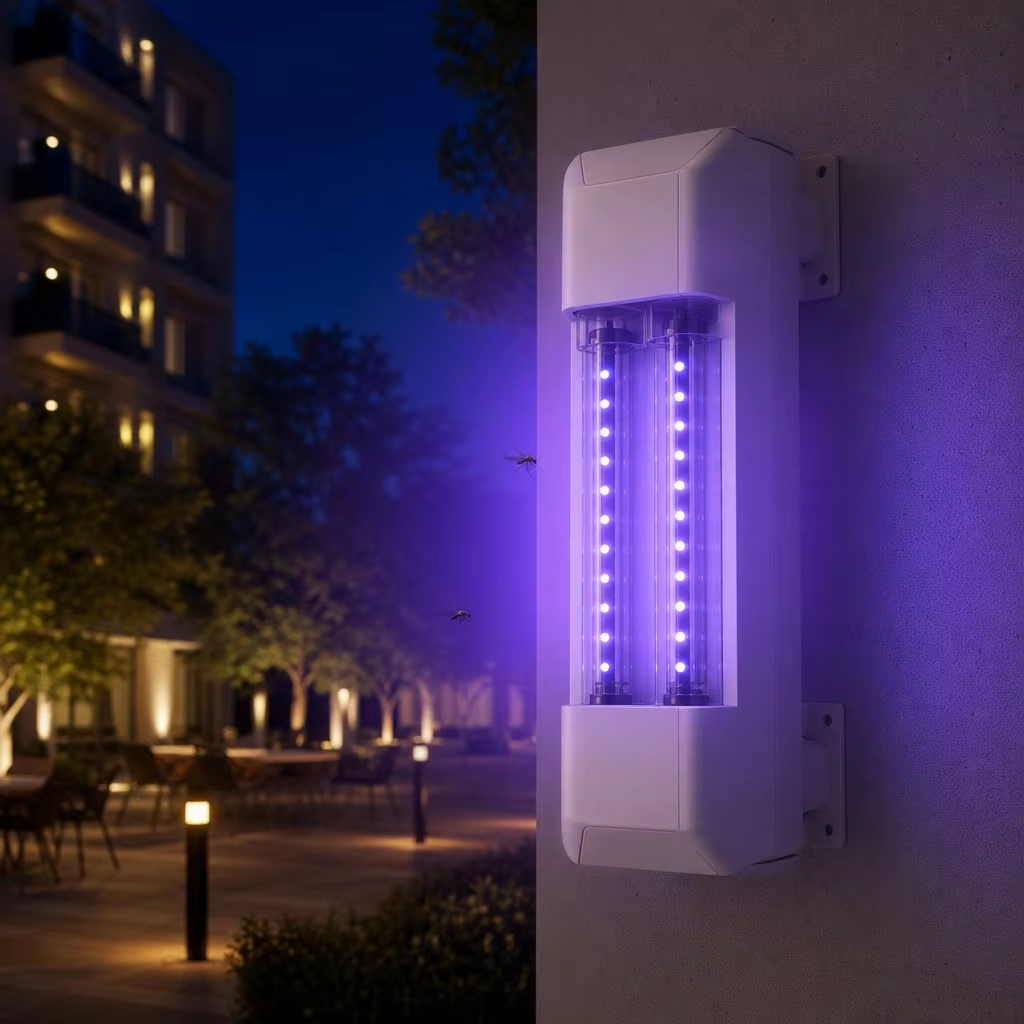
Weather-rated housings and configurations confirmed with our team — for exposed outdoor terraces and covered semi-outdoor zones, the right housing and protection level are specified for your installation rather than assumed.
US regulatory context: UV-based pest control devices are regulated by the US EPA as pesticide devices — a category that requires responsible manufacturing and labeling but no chemical registration. PurlightTech tubes are manufactured to rigorous standards, with UV emission concentrated in the low-risk UVA range for insect attraction.
Commercial facilities across the US and international markets use PurlightTech tubes in insect light traps for outdoor dining, hotel grounds, food plants, hospitals and livestock operations. The specific configuration — band, tube length, housing, and protection level — is confirmed with our team for each installation.
05Deployment: Turn the Trap Into an Audit-Ready Record
A UV LED insect tube does two jobs at once: it controls and it monitors. The catch it accumulates is data — and data is what turns a pest program into a documented, defensible one.
Place traps where pressure is highest — entrances, terrace perimeters, waste points, loading areas — and away from competing light sources.
Log service intervals — catch counts per trap, cleaning, and tube condition, which build the trend curve across the season.
Use the records as audit evidence — in food facilities, hospitality groups and healthcare, insect-monitoring logs are the by-product of a working program. (The full framework — why physical trapping is the load-bearing layer of an integrated pest management program — is covered in our IPM and pesticide-resistance guide.)
Q1: Can a UV LED insect tube stop mosquito-borne disease?
No single device can. An insect tube is a physical trapping layer that reduces adult flying-insect pressure around people and property — it is one layer of an integrated program alongside breeding-site management, sanitation, exclusion and, where appropriate, professional chemical treatment. Never assume a specific catch or reduction rate; measure your own trap data to judge performance.
Q2: Is 365/395nm UVA a disinfection wavelength?
No. 365nm and 395nm are UVA attractant wavelengths used to draw flying insects toward a trap — they are for attraction, not disinfection.
Q3: Should I choose 365nm or 365+395nm dual band?
If mosquitoes are the dominant pest, single-band 365nm is the targeted choice. If the site also has flies, moths and other flying insects — restaurants, stables, waste points — the 365+395nm dual band covers a wider pest mix across the day.
Q4: Can the tubes attract flies and moths too?
The 395nm companion band in the dual-band configuration widens the attractant window to include many fly and moth species. Match the band to the pest mix of your site.
Q5: How long do PurlightTech tubes last?
PurlightTech tubes carry a long rated service life per the specification sheet, confirmed for your model and drive configuration. Actual service life depends on operating environment, cleaning and duty cycle — but the maintenance interval is designed to be a season-scale decision, not a weekly one.
Q6: Are they safe to use around people and food?
Yes, when used as intended. UV emission is concentrated in the UVA range for insect attraction, and responsible placement keeps the trap clear of food contact and direct line-of-sight exposure. Avoid looking directly at the source for prolonged periods, and follow the installation guidance for your environment. In sensitive settings, housing and placement options reduce incidental exposure further.
Q7: How do these compare with fluorescent blacklight tubes?
UV LED tubes are mercury-free, concentrate output in narrow attractant bands, start instantly, and carry a longer rated service life per the specification sheet — which translates to fewer service visits and no mercury disposal stream over the life of the program.
Q8: Does PurlightTech supply tubes for commercial facilities internationally?
Yes. PurlightTech supplies 365nm and dual-band 365/395nm UV LED insect light tubes for commercial facilities, built with mercury-free construction and long service life. Confirm the specific configuration, housing and compliance requirements for your market with our team.
07Conclusion
Europe's 2026 mosquito season is the clearest signal yet that mosquito pressure is a lengthening, commercial-grade problem — and facilities that serve the public are the ones being asked to respond. The response is physical: a 365/395nm UV LED insect tube that runs continuously, needs no chemistry, and produces the monitoring records an auditor can read. PurlightTech builds that tube for commercial duty — mercury-free, dual-band, and configured to your site. The season is the signal; the tube is the answer.
Safety note: 365/395nm UVA light is for insect attraction and trapping. Avoid direct eye exposure, use only for its intended purpose, and follow the installation guidance for your environment. All performance figures are typical reference values and must be validated for your specific application.
 Hot News


 EN
EN