EN
EN


حلول أنابيب LED-UVC:
٢٧٥ نانومتر مقابل ٢٦٥ نانومتر + ٣٦٥ نانومتر
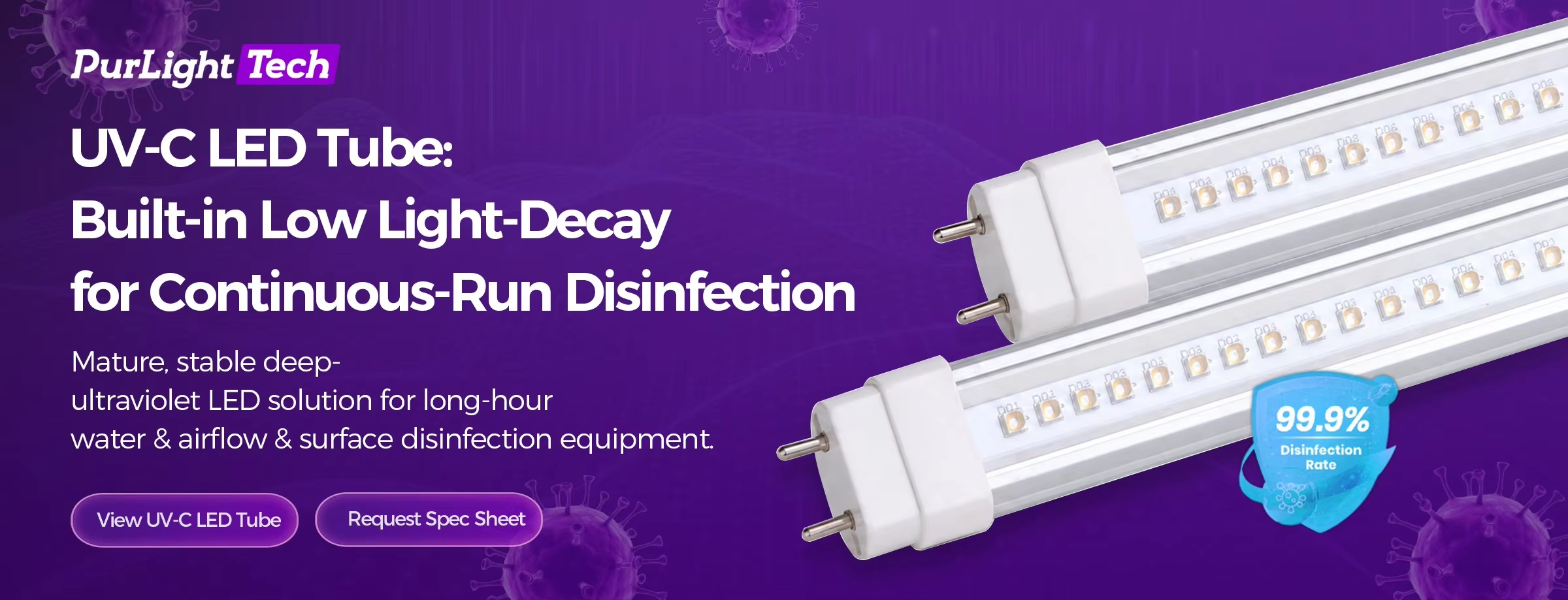
للمصنّعين الأصليين الذين يبنون معدات تعقيم تعمل لفترات طويلة، تُزاوج شركة بورلايت تك بين مصادر LED ذات الأشعة فوق البنفسجية العميقة الناضجة والمستقرة مع أداء منخفض في الانخفاض التدريجي للإضاءة المدمج، مما يضمن ثبات الإخراج دوامًا بعد دوام في أنظمة معالجة الهواء وتعقيم الأسطح على حد سواء. ويُقدِّم هذا الدليل شرحًا مفصّلًا لمصنّعي المعدات والمُدمجين والموزّعين حول المنصتين الأساسيتين لأنابيب التعقيم — ويوضّح كيف يتوافق كل منهما مع ملف نشر عملي فعلي.
٠١ سؤال المصنّع الأصلي: لا يمكن لموجة واحدة أن تؤدي جميع المهام
لا يُعتبر التعقيم بالأشعة فوق البنفسجية العميقة مواصفةً واحدةً فقط. فالأنبوب المناسب يعتمد على ما يتم علاجه — هل هو هواء متحرك أم أسطح — ومدة تشغيل المعدات يوميًّا. ولذلك تتبع شركة بورلايت تك نهجًا معيّنًا قائمًا على الوحدات:
الاختيار بينهما يتوقَّف على دورة التشغيل ومتطلبات جودة الهواء، وليس على جودة المنتج.
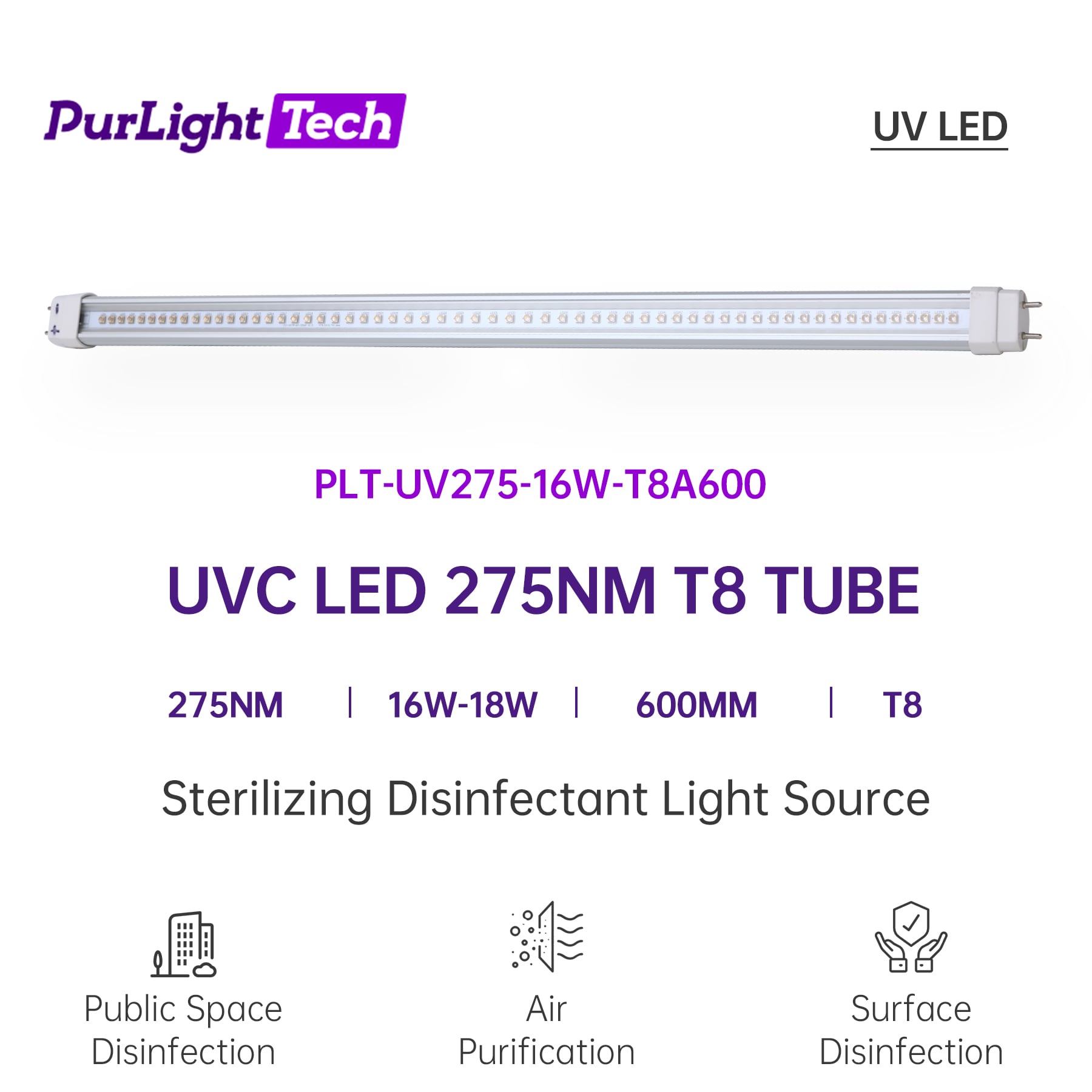
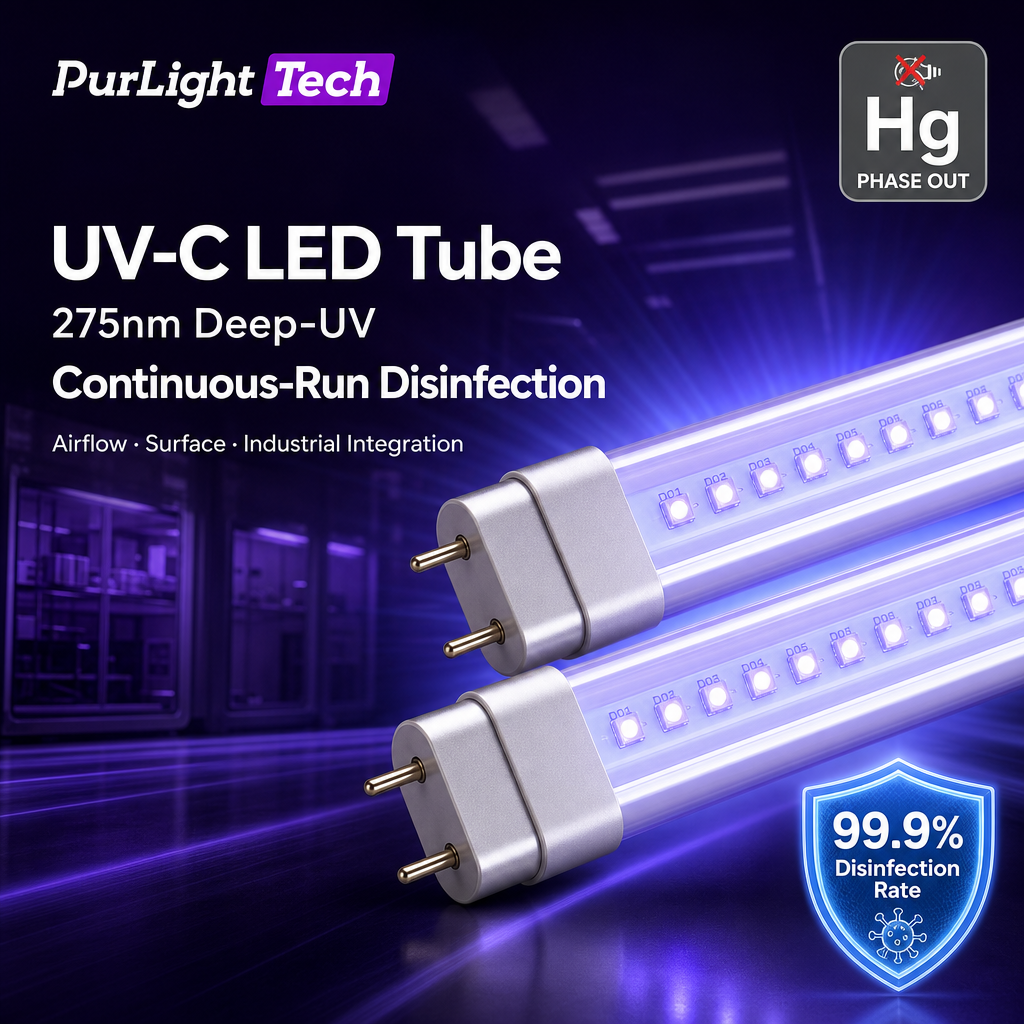
02الحل ١ — أنبوب ليد يُصدر أشعة فوق بنفسجية بطول موجي ٢٧٥ نانومتر (سلسلة تي٨، أطوالها ٤٥٠ ملم أو ٦٠٠ ملم).
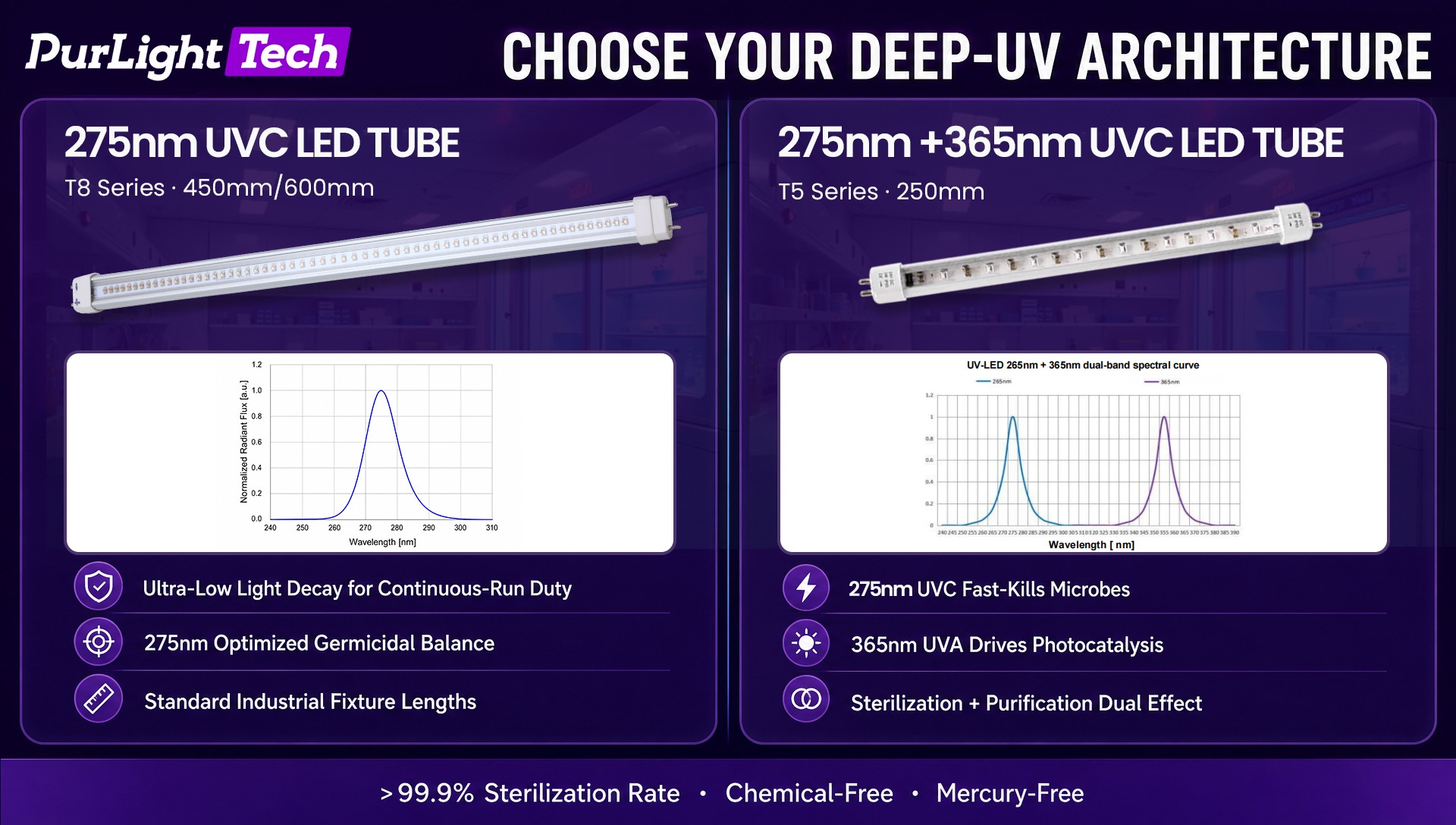
تُبنى كل طرازات T8 حول نفس الطول الموجي للأشعة فوق البنفسجية العميقة المُحسَّن عند ٢٧٥ نانومتر، الذي يوازن بين كفاءة التعقيم العالية وانخفاض شديد في تدهور الإضاءة — والفرق يكمن في التغليف. T8 بطول ٤٥٠ مم و T8 بطول ٦٠٠ مم هذه الأطوال تناسب تركيبات الصناعية القياسية وأجهزة المعالجة الأطول، لذا يستطيع مصنعو المعدات تحديد حجم محرك الإضاءة بما يتناسب مع هندسة التجويف دون الحاجة لإعادة تصميم معمارية السائق ليناسب طولاً موجياً ثانياً.
الأماكن التي يؤدي فيها أداءً ممتازًا:
- معالجة تدفق الهواء — وحدات مثبتة في وحدات معالجة الهواء (AHU) أو داخل القنوات، لمعالجة الهواء عند مصدره.
- معدات تعقيم الأسطح — أنفاق الناقلات، والغرف ذات المرور الواحد، وأنظمة التعقيم السطحية الثابتة أو الروبوتية التي تعمل على مدار اليوم.
يتمثّل العامل الأهم هنا في التصميم المدمج الذي يقلّ فيه الانخفاض في الإضاءة تحت الظروف المنخفضة: فمخرجات مصابيح الليد فوق البنفسجية تتراجع تدريجيًّا مع مرور الساعات التشغيلية، أما الأنبوب المصمَّم بحيث يكون منحنى هذا التراجع أكثر استواءً، فيضمن ثبات الجرعات طوال عمر المعدّة التشغيلي — وهذا ما يجعل عبارة «التشغيل المستمر» حجة تسويقية قوية أمام العميل النهائي.
03الحل الثاني — أنبوب ثنائي الطول الموجي (٢٦٥ نانومتر + ٣٦٥ نانومتر)، سلسلة تي-٥، طوله ٢٥٠ ملم
تُعَدّ منصة تي-٥ بطول ٢٥٠ ملم الحل الأمثل حين تتطلّب البيئة أكثر من مجرد القضاء على الميكروبات. فهي تعمل بنظام ذي طولين موجيين على مرحلتين:
- أمواج فوق بنفسجية قصيرة جدًّا (يو-في-سي) عند ٢٦٥ نانومتر تستهدف المنطقة ذات الذروة الجرثومية لتحقيق إبطال فعّال وسريع للميكروبات.
- أمواج فوق بنفسجية طويلة (يو-في-أ) عند ٣٦٥ نانومتر تنشّط الأسطح الضوئية الحفازة لتفكيك الروائح والملوِّثات العالقة في الهواء — أي المركبات العضوية المتطايرة (فوك) والروائح التي لا تعالجها عمليات التعقيم البحتة.
وتتناسب هذه الصيغة المدمجة بطول ٢٥٠ ملم مع التجاويف الضيِّقة وأغلفة الترقية، والمعدات التي يُعدّ توافر المساحة الداخلية فيها أمراً بالغ الأهمية — مثل أجهزة تنقية الهواء الصغيرة، ووحدات تعقيم الثلاجات ووحدات تخزين الأغذية، والوحدات السطحية التي يُعتبر إزالة الروائح فيها معياراً رئيسياً عند الشراء.
اختر هذه المنصة عندما تتضمن قائمة شكاوى عميلك "إنها تُطهّر، لكن الرائحة لا تزال موجودة" — التخزين البارد، وبيع المواد الغذائية بالتجزئة، والمرافق الصحية، والمساحات الداخلية التي تشكّل جودة الهواء جزءًا من القيمة المقدمة.
04إطار الاختيار: أي حلٍّ يناسب أي بيئة تركيب؟
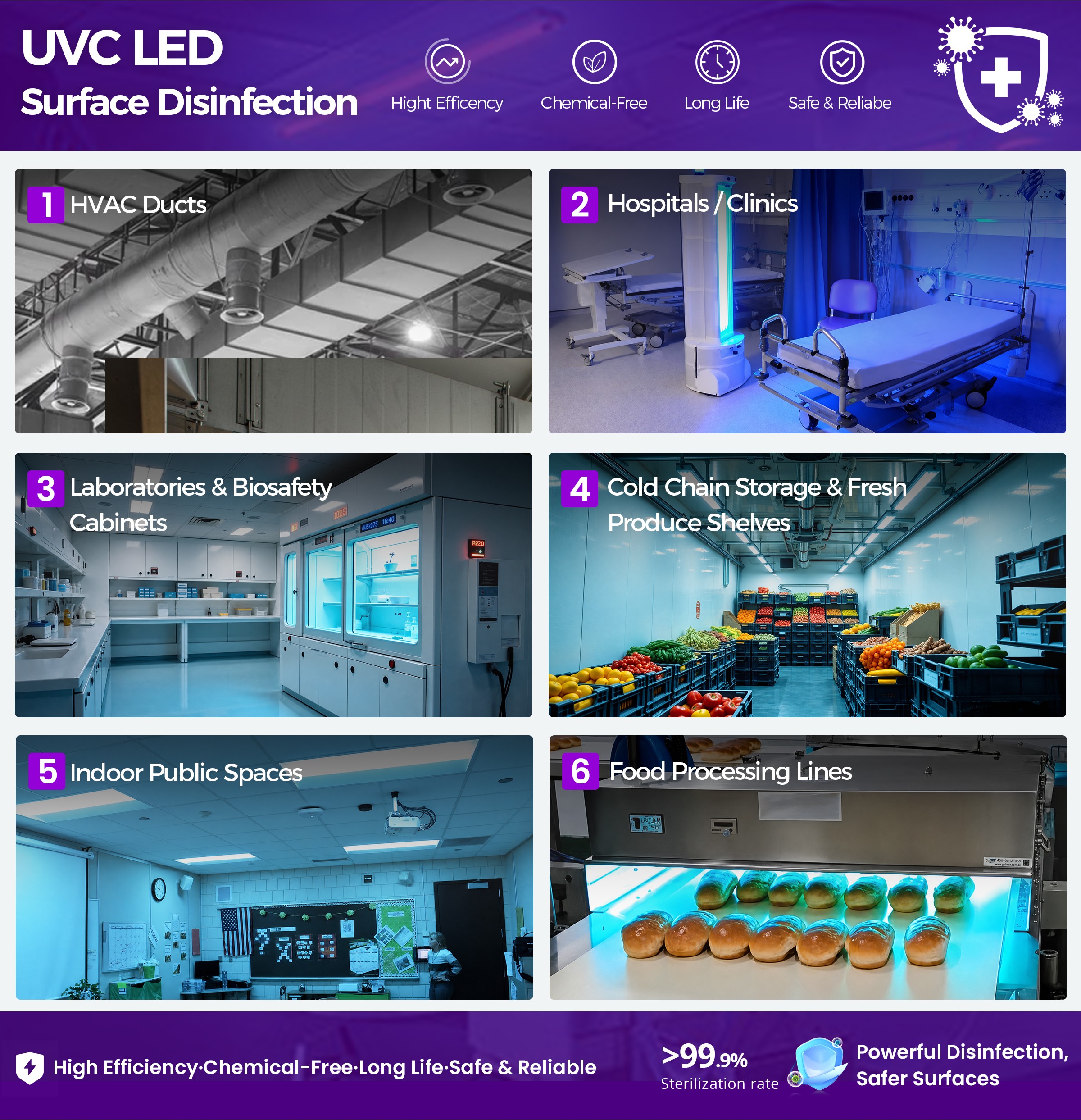
استخدم الجدول أدناه كمرجع عملي في مناقشات طلبات الاقتباس (RFQ).
| ملف البيئة المُركَّب فيها | المنصة الموصى بها | لماذا |
|---|---|---|
| معالجة تدفق الهواء في قنوات أنظمة التكييف/وحدات معالجة الهواء (AHU) | 275 نانومتر، أنبوب T8 (٤٥٠/٦٠٠ مم) | عمل لساعات طويلة؛ انخفاض شديد في التدهور يحافظ على استقرار جرعة التوزيع داخل القناة؛ أطوال ثابتة قياسية |
| خطوط نقل معالجة الأغذية | 275 نانومتر، أنبوب T8 | تعقيم سطحي خالٍ من المواد الكيميائية للمنتجات؛ تشغيل خالٍ من البقايا |
| دوران التعقيم السطحي في المستشفيات والعيادات | 275 نانومتر، أنبوب T8 | قتل فعّال للغاية للميكروبات بين فترات التنظيف اليدوي |
| المختبرات و/armadiات السلامة البيولوجية | 275 نانومتر، أنبوب T8 (الغرفة) | جرعات قابلة للتكرار حيث يكون الرش الكيميائي غير عملي |
| التخزين البارد ورفوف المنتجات الطازجة | ٢٦٥ نانومتر + ٣٦٥ نانومتر، أنبوب تي ٥ | يقتل الكائنات الدقيقة ويتحكم في روائح النضج وروائح الإيثيلين |
| المساحات العامة الداخلية (دورات الاستخدام) | ٢٦٥ نانومتر + ٣٦٥ نانومتر، أنبوب تي ٥ | تنقية + تعقيم في الأماكن التي يلاحظ فيها المستخدمون جودة الهواء |
| تركيب مدمج / غلاف ضيق المساحة | ٢٦٥ نانومتر + ٣٦٥ نانومتر، أنبوب تي ٥ (٢٥٠ مم) | حجم صغير؛ وظيفتان في وحدة واحدة |
05أنماط التوزيع النموذجية من قِبل المصنّعين الأصليين
هذه أنماط مشروع متكررة من نظام التطبيقات الخاص بالعلامة التجارية — استخدمها كقوالب عند تحديد نطاق معدات عميلك.
06ما يجب أن تتحقق منه الشركات المصنعة الأصلية قبل تحديد المواصفات
صدق دورة التشغيل
تأكد من عدد ساعات التشغيل اليومية، ثم اطلب منحنى انخفاض شدة الإضاءة — وليس فقط القيمة القصوى للإشعاع. وتصميم بورلايت المدمج ذي انخفاض شدة الإضاءة المنخفض هو المواصفة التي تحمي المعدات العاملة باستمرار.
اتساق مستوى الشرائح الإلكترونية
تظهر المنصة شرائح إل إي دي مُوسومة بشكل فردي (التسلسل من دو١ إلى دوسي) عبر المصفوفة — وهي مؤشر مفيد على دقة الترتيب الآلي للشرائح واتساق الدفعات في الإنتاج على نطاق واسع.
هندسة التجويف
أطوال أنابيب تي٨ البالغة ٤٥٠ مم و٦٠٠ مم وأنابيب تي٥ البالغة ٢٥٠ مم تغطي النطاق الشائع للأحجام. اختر الطول أولاً وفقاً لهندسة الحجرة، ثم حدد استراتيجية الطول الموجي ثانياً.
الموقف التنظيمي
مصابيح الأشعة فوق البنفسجية ذات الصمامات الثنائية (UV LED) الخالية من الزئبق تلغي الحاجة إلى تخزين الزئبق والتعامل معه والتخلص منه، وهي التزامات تفرضها مصابيح الأشعة فوق البنفسجية من الجيل القديم (UV-C) على المعدات النهائية الخاصة بك. يُرجى التحقق من المستندات التنظيمية المطلوبة في السوق المستهدفة.
الطريقة النظيفة لتحديد مواصفات التعقيم بالأشعة فوق البنفسجية هي أن تتوقف عن طرح سؤال «أي أنبوب أشعة فوق بنفسجية من نوع UVC»، وابدأ بطرح سؤال «ما الوظيفة التي يؤديها الجهاز؟». أما أنظمة تدفق الهواء والسطوح التي تعمل باستمرار، فهي تنتمي إلى منصة t8 بطول ٢٧٥ نانومتر — طول موجي واحد، انحدار منتظم، وأطوال قياسية.
أما البيئات التي يجب أن تكون رائحتها نظيفة أيضًا — مثل سلسلة التبريد، وتجارة التجزئة الغذائية، والمساحات المشغولة، والتركيبات الضيقة في المشاريع التحديثية — فهي تنتمي إلى منصة t5 بطول ٢٦٥ نانومتر + ٣٦٥ نانومتر حيث تتم عمليتا التعقيم والتنقية في وحدة واحدة.
اطلب ورقة المواصفات، وراجع منحنى التناقص مقارنةً بدورة العمل الخاصة بك، وابنِ قصة التعقيم التي يستطيع عملاؤك الدفاع عنها.